
Learn To Ride Pump Tracks Across the UK
JB Extreme Landscapes designs and constructs learn-to-ride pump tracks for schools, councils, developers, parks and community organisations across the UK. These beginner-focused cycling facilities provide welcoming spaces where new riders can develop balance, control and confidence before progressing to larger pump tracks, BMX facilities or trail environments. Every layout is tailored to the available space, intended users and wider objectives of the project.
Beginner-Focused Cycling Facilities Designed for Progression
A successful learn-to-ride facility should feel approachable to someone who is still developing confidence on a bicycle. Features need to be engaging without creating unnecessary barriers, while the layout should allow riders to repeat movements and build familiarity at a comfortable pace.
At JB Extreme Landscapes, we design beginner-focused tracks that support the development of fundamental cycling skills. Depending on the project, a facility may include gentle rollers, wide turns, controlled gradients, straights, junctions and clearly defined riding routes.
The design can help riders practise balance, steering, braking, looking ahead and moving over changes in terrain. As confidence improves, users can begin to explore pumping movements and more continuous riding. By creating a clear progression from basic cycling control towards pump track skills, the facility can support both first experiences and continued development without quickly becoming repetitive.


Progressive Layouts for Different Ages and Abilities
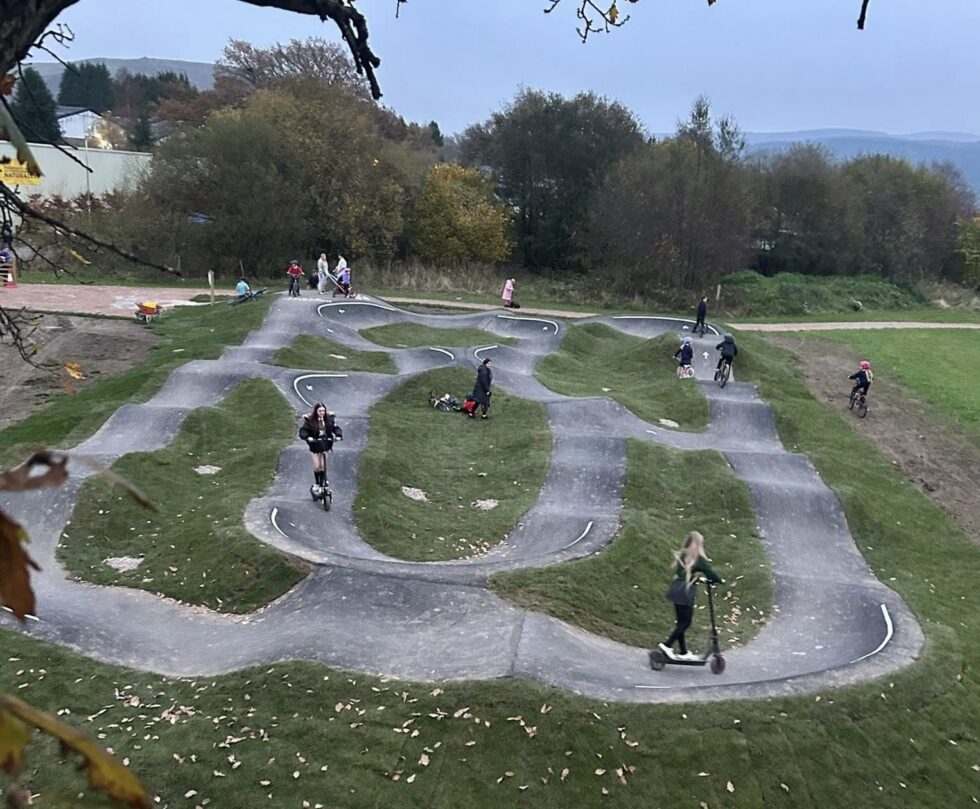
Beginner riders do not all develop at the same speed. Some may be moving away from balance bikes, while others may already ride confidently on level ground but have limited experience of rollers, berms or dedicated cycling facilities. A learn-to-ride track therefore needs enough variety to remain useful as skills improve.
Our layouts can incorporate progressive options that allow users to choose an appropriate route or repeat individual features before attempting a longer circuit. Sightlines, spacing, gradients and feature sequencing are considered carefully so that riders can understand where they are going and build confidence through repetition.
Where space permits, a learn-to-ride area can form part of a larger cycling development with connections to a full pump track, skills area or trail network. This creates a natural pathway from introductory riding towards more advanced facilities while helping mixed-ability groups use the wider site more effectively.


Learn-To-Ride Tracks for Schools and Educational Settings
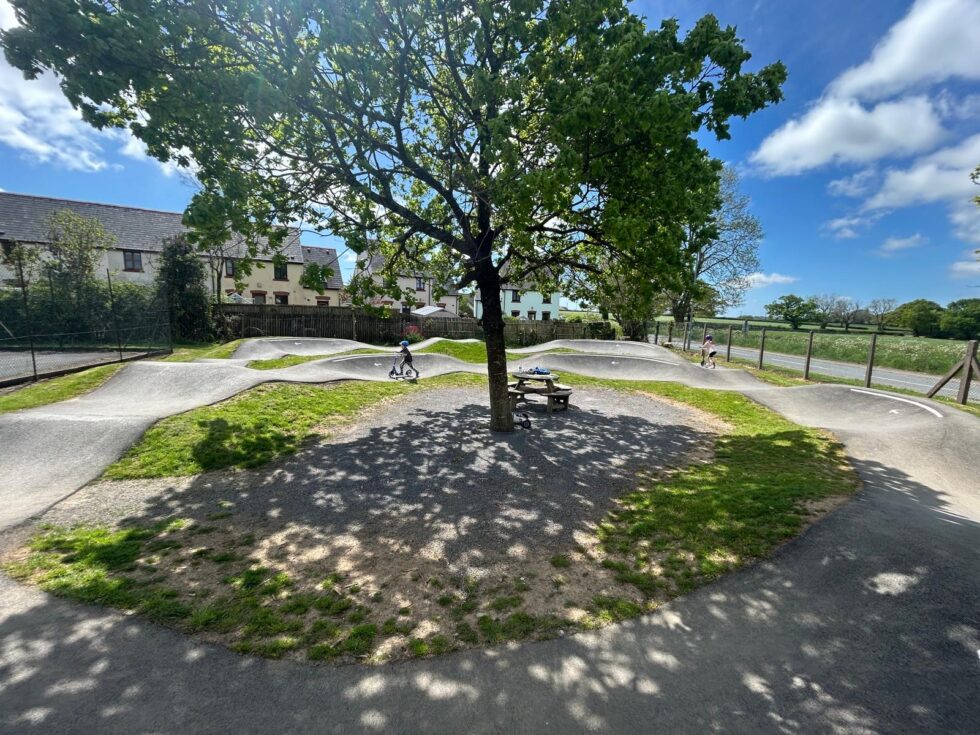
Learn-to-ride tracks can provide schools with a dedicated environment for cycle training, physical education, extracurricular activities and supervised recreational use. Unlike temporary layouts, a purpose-built facility remains available throughout the school year and can become an established part of the school’s outdoor provision.
JB Extreme Landscapes works with primary schools, secondary schools, academies, colleges and educational trusts to develop cycling spaces around the needs of pupils and staff. We consider available land, supervision, circulation, access, storage connections, drainage and how the track may be used during structured sessions.
Our wider experience constructing school cycling facilities enables us to consider the complete site rather than viewing the riding loop in isolation. The finished facility can help schools provide more engaging opportunities for outdoor activity while supporting pupils as they develop cycling confidence, coordination and independence.
Why Choose JB Extreme Landscapes?
JB Extreme Landscapes combines specialist riding knowledge with professional earthworks, track construction and landscape experience. This combination is particularly important for beginner facilities, where subtle decisions about gradients, spacing and feature shape can influence whether riders feel comfortable using the track.
We work collaboratively with schools, councils, developers, cycling organisations and community groups to create layouts suited to real users and realistic site conditions. Our designs consider immediate beginner needs while allowing for progression, future maintenance and integration with wider cycling provision.
Clients can appoint us for a standalone learn-to-ride track or as part of a broader project involving a pump track, bike park, BMX facility or sports landscape. Our nationwide service provides a single specialist partner for planning, construction and continued facility support across the UK.
Connecting Learn-To-Ride Areas with Wider Cycling Facilities
A learn-to-ride track can operate independently, but it can also provide the entry-level element of a larger cycling destination. Connecting beginner provision with more challenging facilities gives riders a visible progression route and can help a site serve more ages and abilities.
Our bike park design and consultancy service can help clients plan how introductory loops, pump tracks, skills areas, BMX features, trails and supporting infrastructure should work together. This may include considering rider circulation, separation between ability levels and the future development of the site.
After construction, we can also support facilities through professional pump track repairs and maintenance. Bringing design, construction and ongoing care together helps clients protect their investment while providing cycling opportunities that remain engaging as riders gain confidence and progress.


Frequently Asked Questions
These answers explain how learn-to-ride tracks differ from other cycling facilities and how they can be incorporated into schools, parks and community projects.
A learn-to-ride pump track is a beginner-focused cycling facility designed to help users develop confidence and fundamental bike-handling skills. It will normally use gentler gradients, wider turns and less demanding features than a full pump track intended for more experienced riders. A layout may include straights, rollers, simple corners, junctions and clearly defined routes where users can practise balance, braking, steering and looking ahead. As riders improve, they can begin to link features together and develop the pumping movement associated with larger pump tracks. The facility may be constructed as a standalone track or incorporated into a school cycling area, community bike park or wider recreational development.
Learn-to-ride facilities are primarily designed for children, families, beginners and riders developing confidence away from traffic. Depending on the design, they may be used with balance bikes, conventional bicycles and other appropriate wheeled equipment. The intended user group should be established during the project brief because it influences feature dimensions, gradients, circulation, surfacing and the overall scale of the facility. A school track may focus on supervised pupil sessions, while a public community track may need to accommodate a broader mix of ages and riding experience. JB Extreme Landscapes tailors each design to the organisation’s objectives rather than relying on one standard layout for every site.
The required space depends on the number of features, intended users, site shape and whether the facility will be standalone or connected to other cycling provision. Compact sites may accommodate a simple loop or skills circuit, while larger spaces can provide multiple routes, progressive options and areas for groups to wait between sessions. The surrounding land is also important because entrances, pedestrian routes, visibility, drainage and suitable clearance around riding features must be considered. We assess the complete site before proposing a design, helping clients understand how the available space can be used effectively without creating an overcrowded or confusing layout.
The most appropriate surface depends on usage, budget, site conditions and maintenance expectations. Asphalt can provide a consistent riding surface and relatively low routine maintenance, making it suitable for busy public or educational facilities. Compacted aggregate can create a more natural appearance and may suit certain budgets or landscape settings, although it will generally require more regular inspection, reshaping and replenishment. Drainage and construction quality remain important whichever surface is selected. We discuss the benefits and maintenance implications of suitable options during the design process so the client can choose a solution aligned with anticipated use and long-term facility management.
Yes. JB Extreme Landscapes provides national design and construction services for schools, academy trusts, local authorities, developers, parks and community organisations. We adapt each project to its intended setting, users, available land and operational requirements. School projects may prioritise supervision, structured learning and connections with existing playground or sports areas. Council and community facilities may require broader accessibility, clear circulation and integration with public paths or larger recreation spaces. We can support the project from initial site discussions and concept development through to groundworks, surfacing and completion, providing one coordinated service for the delivery of the facility.
Yes. Creating a pathway towards more advanced cycling is one of the main benefits of a learn-to-ride facility. Beginner tracks allow riders to develop balance, control, cornering and confidence before encountering faster or more demanding features. Where a site contains sufficient space, the learn-to-ride area can be positioned alongside a larger pump track so users can progress when they are ready. Our team can design both elements as part of one coordinated project or advise on how a beginner facility could support the future expansion of the site. Explore our pump track design and construction service for further information about larger facilities.